Treat what the water is doing.
Coastal outfall · illustrative concept
One coast. Before and after.
Drag the divider to compare untreated discharge with the treatment concept. The same outfall, seen from the same viewpoint.

Drag left or right. Use arrow keys when the image is focused.
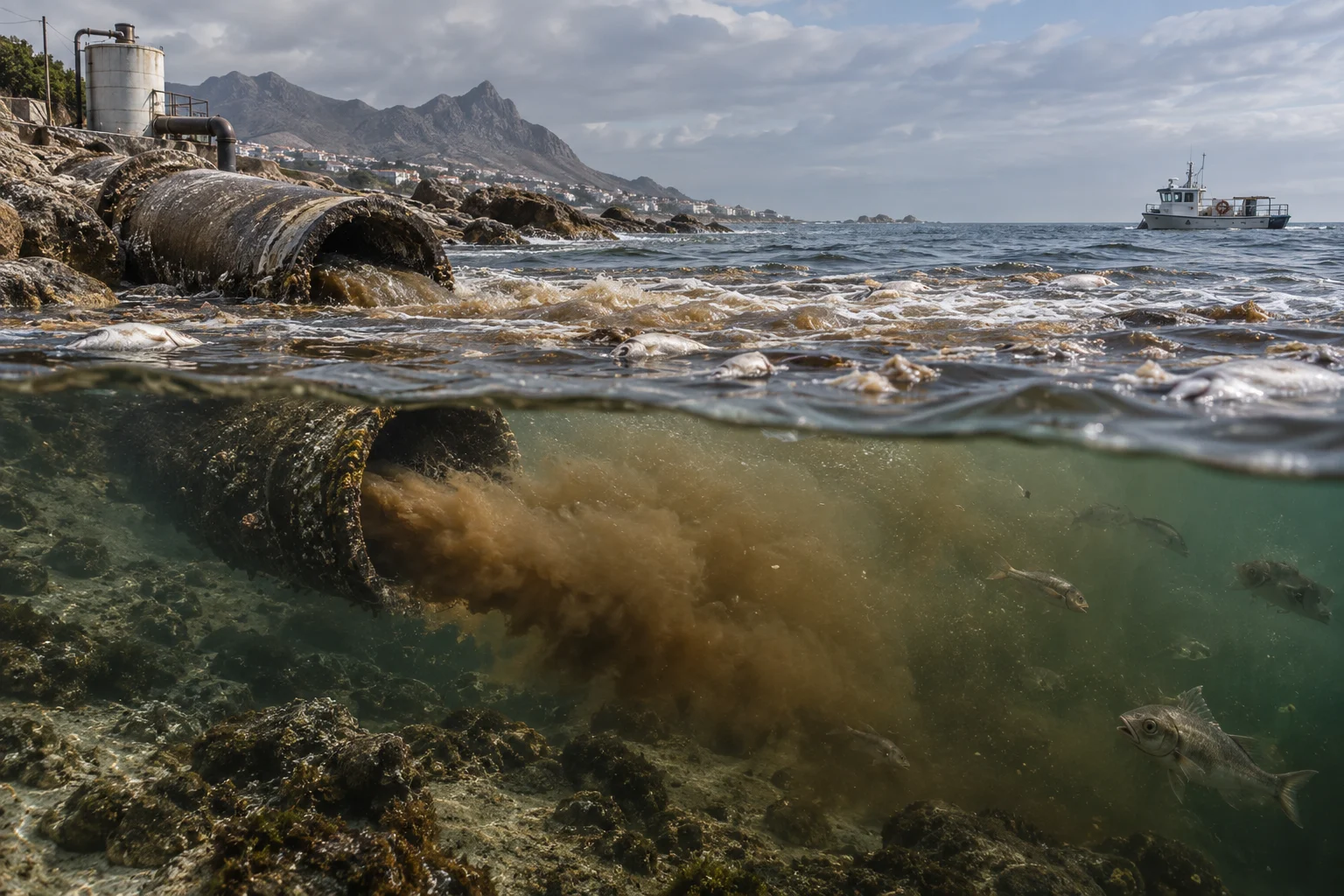
Before · untreated discharge
A sewage plume, floating organic waste and dead fish depict polluted water and odour at the outfall.
After · treatment concept
T3 Hydrox is dosed before discharge; Hydrobiotics is applied from the boat. Clearer water, returned fish and the absence of odour are illustrated. Hydrobiotics can also be applied upstream.
AI-generated illustrative comparison, not photographs of a measured treatment result or a recovery timeline. Actual outcomes depend on site conditions and treatment design.
What is happening in your water?
The same technology can serve very different plants. Start with the symptom, then trace the likely intervention through the process.
T3 Hydrox
The fast intervention. T3 Hydrox is dosed into the existing flow to create an oxidation response where the problem is occurring — particularly H₂S, odour and compounds that resist conventional treatment.
Discuss an oxidation applicationReported H₂S response in the Abu Dhabi sewer trial
Reported starting H₂S reading in that trial
Reported post-treatment H₂S reading
H₂S oxidation
Designed for rapid odour and sulphide control in wastewater flows.
Pathogen control
Oxidative treatment can reduce microbial loading without relying on chlorine alone.
Difficult compounds
Targets compounds conventional biological treatment can struggle to break down.
Retrofit approach
Designed to dose into existing treatment infrastructure rather than require a new plant.
Reported sludge-volume reduction across treatment programmes
Reported window for visible response, application dependent
Natural, non-GMO microbial treatment cultures
Sludge digestion
Supports biological reduction of accumulated organic solids and handling pressure.
Ammonia control
Supports the biological processes required for nitrification and improved effluent quality.
Natural cultures
Non-GMO microbial cultures used as a biological treatment intervention.
Infrastructure life
Lower sulphide and organic loading can reduce some of the conditions that accelerate corrosion.
Hydrobiotics
Microbial cultures continue working on organic load and accumulated solids after the immediate chemistry has done its job, helping return treatment capacity to the system over time.
Discuss a biological applicationFast chemistry. Living recovery.
Where the water requires it, oxidation and biological treatment work as one sequence: reduce the immediate contaminant pressure, then let biology continue the recovery.